COLD CHAIN FOR TELEHEALTH COMPANIES
Your shipment does not end when the truck arrives. It ends when the patient opens the fridge. We spec 2–8°C packaging for the whole journey — including the hours it spends on a porch in August.
YOU ARE SHIPPING TO A PORCH, NOT A LOADING DOCK
Patient-direct is a fundamentally different cold chain than pharmacy-to-pharmacy or clinic-to-clinic. A commercial consignee has a receiving desk, a cooler, and someone whose job it is to put your product away. A patient has a doorstep, a work schedule, and a tracking notification they may not read for hours.
That gap — between "delivered" and "opened" — is where most telehealth cold chain failures actually happen. The shipper performed exactly as validated through carrier transit and then spent another six hours in direct sun on a south-facing concrete step. If your hold time was specced for the truck, you specced for the wrong journey.
WHAT MAKES PATIENT-DIRECT HARD
UNATTENDED DELIVERY
Nobody signs. Nobody is home. The parcel sits. Your packaging is the only thing standing between the medication and the ambient temperature for however long that takes.
EVERY CLIMATE ZONE AT ONCE
A national patient panel means Phoenix in July and Minneapolis in January on the same ship day. One pack-out spec cannot be optimal for both — but it can be safe for both if it is sized to the worst case.
COST PER SHIPMENT COMPOUNDS
At 5,000 to 15,000 parcels a month, a dollar of avoidable dimensional weight is five to fifteen thousand dollars a month. Insulation choice is a P&L line, not just a spec.
THE PATIENT IS THE LAST MILE
The patient decides whether to use, refrigerate, or discard a shipment that felt warm. That decision belongs to your clinical team — and the packaging has to make the right action obvious.
UNBOXING IS THE BRAND
A patient paying a monthly subscription judges the whole service by what shows up. A leaking cooler and wet corrugate is a churn event, not just a packaging defect.
SUMMER IS NOT AN EDGE CASE
It is a third of the year and it is when your volume is most exposed. A cold chain that only works from October to April is not a cold chain.
HOW WE SPEC A TELEHEALTH PACK-OUT
The order of operations matters. Most programs get this backwards, adding refrigerant to compensate for a shipper that was under-insulated to begin with — which adds weight and cost without buying much time.
1. WALL THICKNESS FIRST
Insulation performance sets the ceiling on hold time. Refrigerant only buys time within that ceiling. Getting the shipper right is cheaper per hour of hold time than throwing gel at a thin mailer, and it does not add dimensional weight the way extra refrigerant does.
2. REFRIGERANT SIZED TO WORST-CASE AMBIENT
Not average ambient, and not last quarter's configuration. Summer lanes need more refrigerant than winter lanes for the same transit time, and phase-change material holds a tighter band than water-based gel when the margin for error is small. The right answer differs by heat tier.
3. SERVICE LEVEL AS A DESIGN VARIABLE
Upgrading service on hot lanes in peak season is often cheaper than over-engineering every parcel nationally. Shortening the clock is a legitimate alternative to extending hold time, and it should be priced against the packaging change rather than assumed.
4. SHIP-DAY DISCIPLINE
A parcel that ships Thursday for a Friday delivery has a very different risk profile than one that ships Friday and sits in a network over a weekend. Ship-day cutoffs are free risk reduction. Most programs discover this the expensive way.
5. VALIDATE THE WHOLE JOURNEY
Audit real lanes with data loggers, including the dwell tail, and re-audit seasonally. A configuration validated in April tells you very little about the same lane in August.
SHIPPERS FOR PATIENT-DIRECT VOLUME
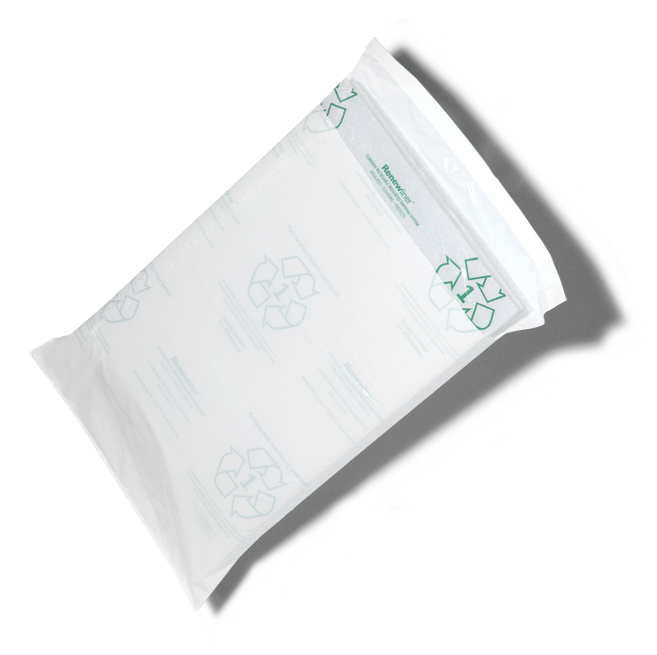
FROSTMAILER
Curbside-recyclable rPET thermal mailer, ISTA 7E validated up to 39 hours. Ultralight and small-format, which directly lowers dimensional weight on every patient parcel. The default for single-patient monthly supply at volume.
VIEW DETAILS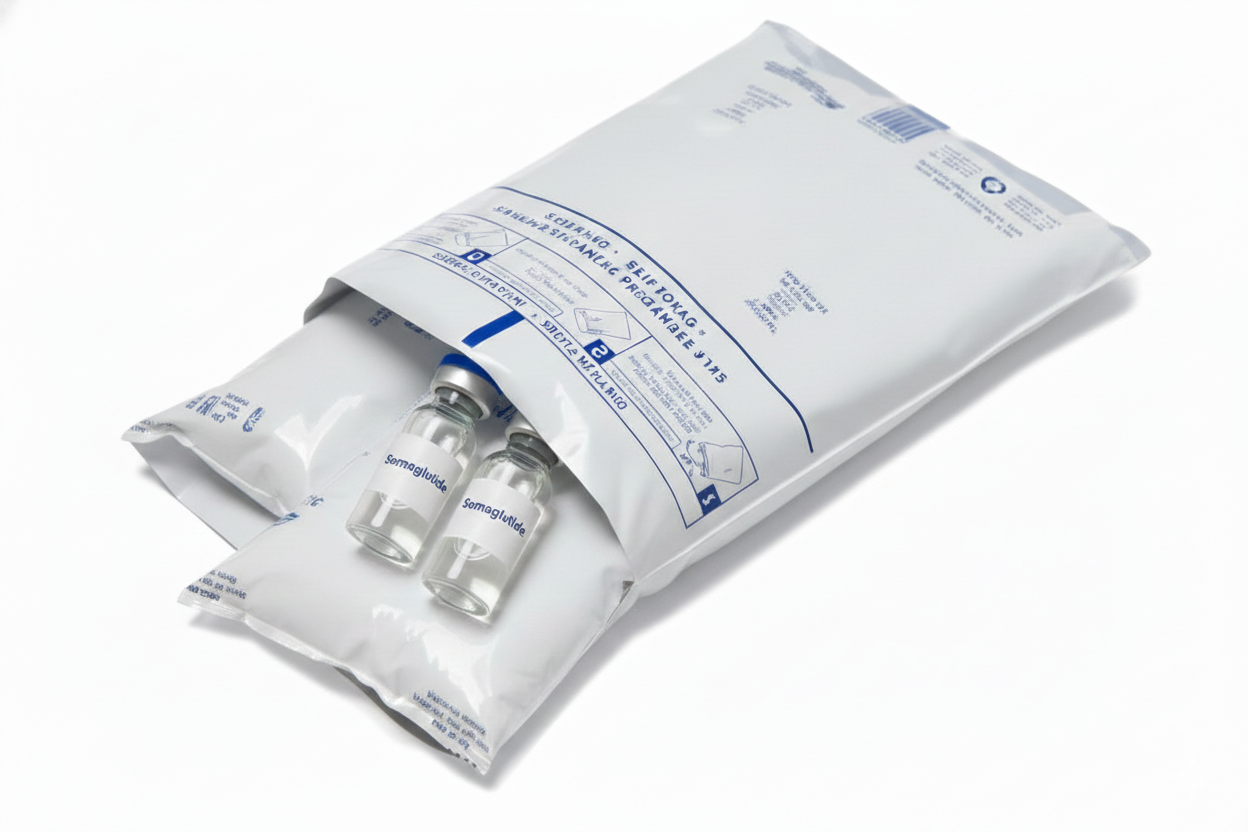
FROSTEXPAND
Ships and stores flat, self-expands at pack-out. 87% less storage space than rigid EPS coolers — which matters when you are staging tens of thousands of shippers. No outer box, no void fill, no kitting step. UN3373 compliant.
VIEW DETAILS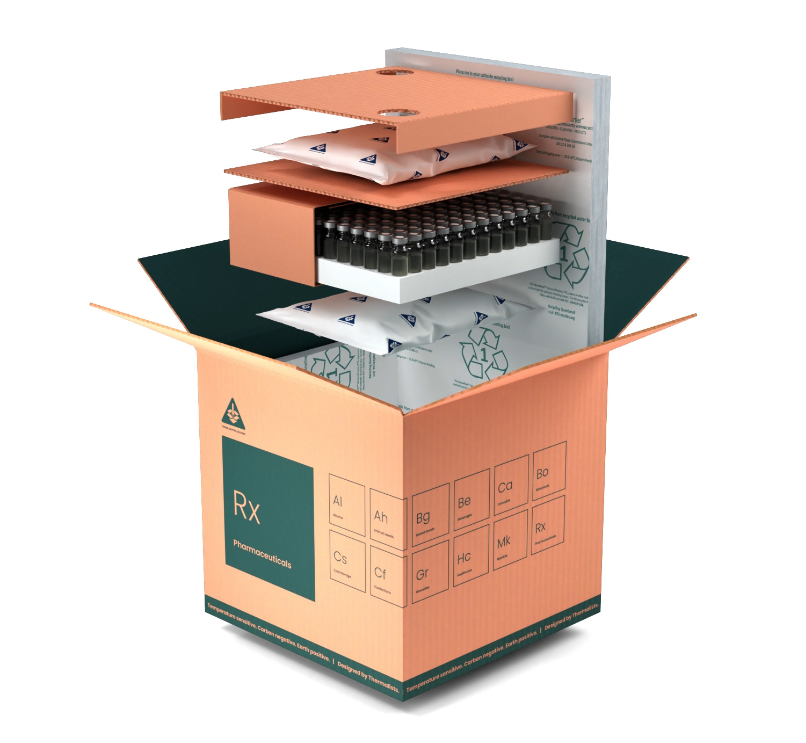
FROSTLINER
Drop-in liner for programs already running a corrugated box line. 100% rPET, 40% lighter than EPS foam, curbside recyclable. Keeps your existing carton and automation while upgrading thermal performance.
VIEW DETAILS
REFRIGERANTS
FrostGel packs and FrostSheet phase-change materials. PCM is the upgrade path for hot lanes and long dwell — it holds a tighter 2–8°C band than water gel, which is exactly what a summer porch scenario demands.
VIEW DETAILSPACK-OUT BY HEAT TIER
A seasonal framework rather than a single year-round spec. Tiers are defined by destination ambient on the delivery day, not by calendar month — a 95°F day in May is a hot lane.
| HEAT TIER | DESIGN CONSIDERATION | SHIPPER | REFRIGERANT APPROACH |
|---|---|---|---|
| Mild — moderate ambient | Transit + short dwell | FrostMailer or FrostExpand, standard wall | Gel, baseline load |
| Warm — elevated ambient | Transit + full dwell | FrostMailer or FrostExpand, stepped up | Increased gel load |
| Hot — peak summer lanes | Worst-case dwell in sun | Heavier wall, or box + FrostLiner | PCM, sized to lane |
| Extreme — desert Southwest | Shorten the clock | Heavier wall + service upgrade | PCM + ship-day cutoff |
Directional framework only. Actual configurations are validated against your lanes, payload, and delivery-day ambient data during a pack-out consultation.
THE PATIENT IS PART OF THE COLD CHAIN
Packaging that performs perfectly still fails if the patient leaves it on the counter, or discards a perfectly good shipment because it "felt warm." Two low-cost interventions close most of that gap.
DELIVERY-DAY NOTIFICATION
A message on the delivery day that creates urgency to bring the parcel in — not a generic shipping-confirmation email sent two days earlier. The goal is shrinking dwell, which is cheaper than engineering around it.
IN-BOX ARRIVAL CARD
One card, one instruction set: refrigerate immediately, and here is exactly what to do and who to call if something looks wrong. Excursion disposition is a clinical decision for your pharmacy team, not a judgment call for the patient.
GO DEEPER
Summer Shipping for Telehealth Pharmacies
Ship-day windows, service level by heat tier, monitoring, and the patient communication playbook.
The Porch Problem
Designing for dwell time instead of carrier transit — and how dwell changes refrigerant sizing.
Semaglutide & Tirzepatide Refrigeration
Storage and transit requirements for the two most-shipped GLP-1 molecules.
Gel Packs vs PCM for 2–8°C
When the tighter band of phase-change material justifies the cost difference.
Insulated Mailer Hold Time
What hold-time ratings actually mean, and why they move with ambient temperature.
How to Ship Peptides & GLP-1s
The end-to-end pack-out walkthrough, from temperature band to carrier handoff.
FREQUENTLY ASKED QUESTIONS
How should porch dwell time change my packaging spec?
Design hold time should equal carrier transit plus realistic worst-case dwell at the destination's peak ambient. For patient-direct programs that usually means specifying meaningfully more hold time than the carrier's stated transit, because the parcel is unattended at the end of the journey.
What days should we ship refrigerated medication in summer?
Early enough in the week that a delayed parcel does not sit in a network over a weekend. Ship-day cutoffs cost nothing and remove an entire category of failure. The specific cutoff depends on your carrier and lane mix.
Is it cheaper to upgrade packaging or upgrade shipping service?
It depends on lane mix and volume, and it is worth pricing both. On extreme lanes in peak season, shortening the clock with a service upgrade is frequently cheaper than over-engineering every parcel nationally to survive the worst case.
What should a patient do if a shipment arrives warm?
Follow one documented path: do not discard it, do not use it, contact the pharmacy with the order number and any temperature indicator reading, and follow the pharmacy's storage instruction meanwhile. Disposition is a clinical decision under your excursion policy, not a patient decision.
Can COLDFRONT support 5,000 to 15,000 parcels a month?
Yes. That volume band is the core of what we supply, across 13 facilities nationwide with inventory positioned to shorten transit distance. We confirm lead time for your SKUs and quantity in writing before you commit.
Can we get samples before switching?
Yes, with no minimum order quantities on standard products. We match samples to your actual shipment profile so you are testing the configuration you would run, not a generic kit.
SPEC YOUR SUMMER CONFIGURATION
Send us your lanes, your monthly volume, and the destinations that worry you. We will size the shipper and refrigerant to worst-case ambient, confirm lead time in writing, and get samples out.