COLD CHAIN PACKAGING FOR CONFECTIONERY
DTC chocolate, gummies, and premium confections. Cool-chain configurations that stop melt and bloom — and an unboxing that still looks like the brand your customer paid for.
CHOCOLATE DOESN'T NEED A FRIDGE. IT NEEDS A CEILING.
Confectionery is the most commonly mis-specced category in cold chain, because people reach for refrigerated packaging when the actual requirement is a cool chain. Chocolate does not need to arrive at 2–8°C. It needs to never cross its melt point, and it needs to avoid the temperature swings that cause bloom.
Over-refrigerating is its own failure. Cold chocolate pulled into a warm, humid room sweats, and that condensation dissolves surface sugar and dries into the grey, streaky film customers photograph and post. A shipment can arrive perfectly cold and still look ruined.
HOW CONFECTIONERY SHIPMENTS FAIL
FAT BLOOM FROM MELT
Product crosses its melt point, cocoa butter migrates to the surface, and it recrystallises as a dull grey film. The chocolate is safe to eat and completely unsellable as a gift.
SUGAR BLOOM FROM CONDENSATION
The over-refrigeration failure. Cold product meets humid air, moisture condenses, surface sugar dissolves and recrystallises rough. Caused by too much cold, not too little.
THE WEEKEND IN A HUB
A Thursday or Friday ship date in July means a parcel sitting in an unconditioned facility over a weekend. No packaging spec survives that reliably. Ship-day rules are the cheapest fix in the category.
GEL PACKS TOUCHING PRODUCT
Direct contact creates a cold spot, local condensation, and often a cosmetically damaged piece. Placement and separation matter as much as how much refrigerant you use.
DESIGNING FOR THE DESTINATION
The route matters more than the endpoint. A parcel routed through a hot inland hub gets hot even if both origin and destination are mild.
FOAM IN A PREMIUM UNBOXING
A customer paying gift prices opens the box and finds EPS crumbs. The thermal performance was fine; the brand impression was not.
THE SEASONAL PLAYBOOK
Confectionery is the most seasonal category we supply. A single year-round spec means overspending through winter and gambling through summer. Four rules do most of the work.
1. FORECAST THE ROUTE, NOT THE DESTINATION
Ambient exposure happens in transit and in sorting hubs, not just on the doorstep. Two mild endpoints connected through a hot inland hub is a hot lane, and it should be specced as one.
2. SHIP EARLY IN THE WEEK
Monday through Wednesday in summer, without exceptions. The single highest-return operational change available to a confectionery brand, and it costs nothing but a cutoff rule on the storefront.
3. CAP TRANSIT TIME IN SUMMER
Beyond about two days, the refrigerant load required to hold a cool chain through peak ambient stops being economic. Shortening the clock is usually cheaper than engineering around a longer one.
4. SIZE REFRIGERANT TO THE HEAT, AND PLACE IT PROPERLY
More gel is not automatically better — poorly placed refrigerant creates cold spots and condensation. Separation between refrigerant and product is part of the spec, not an afterthought.
SHIPPERS FOR CONFECTIONERY
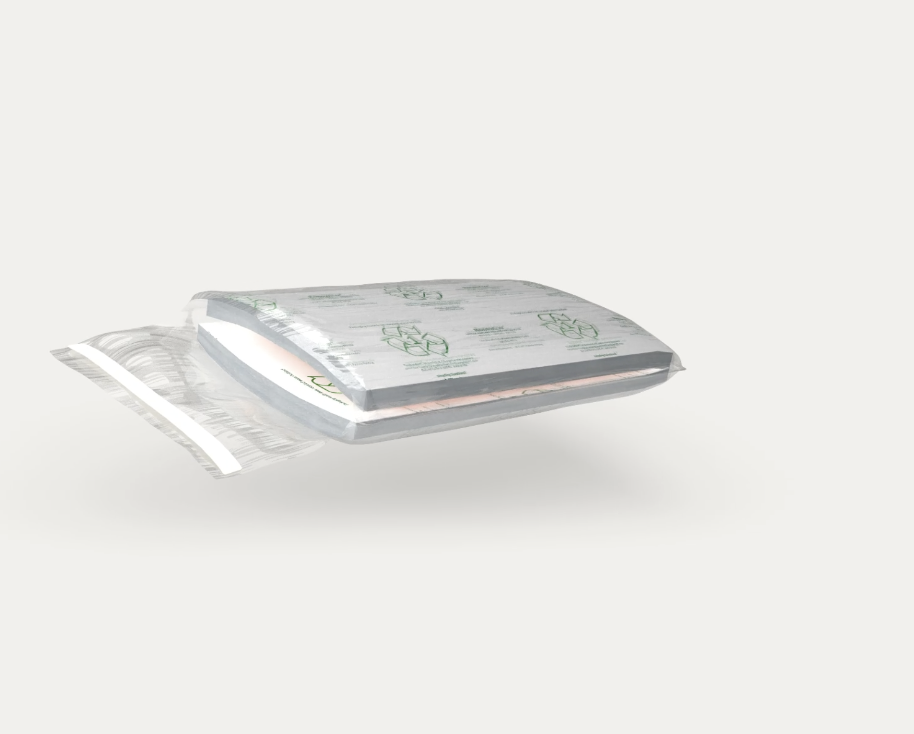
FROSTMAILER
Curbside-recyclable rPET thermal mailer. Lightweight and small-format for single-box chocolate, artisan gummies, and premium treats — which keeps dimensional weight down on a category where shipping cost often exceeds product cost.
VIEW DETAILS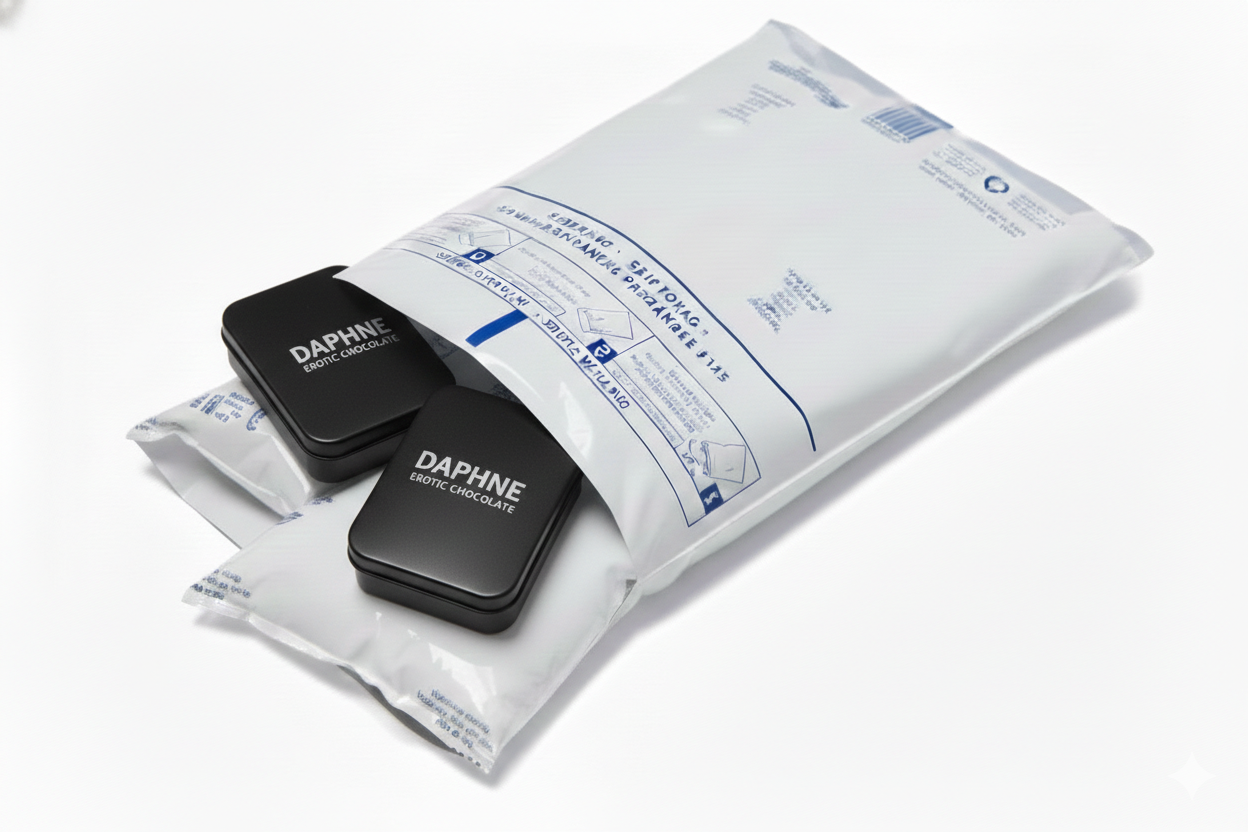
FROSTEXPAND
Ships and stores flat, self-expands at pack-out. 87% less storage than rigid coolers — the answer to the Q4 storage crunch when you need thousands of shippers staged and have nowhere to put them.
VIEW DETAILS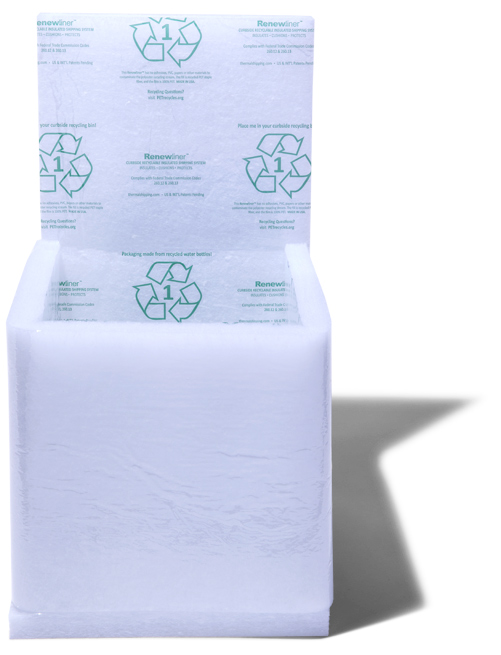
FROSTLINER
Drop-in liner for brands with an existing branded carton. 100% rPET, 40% lighter than EPS, curbside recyclable. Keeps your printed box — and your unboxing — exactly as designed.
VIEW DETAILS
FROSTWAVE
Paper-based insulation panels, curbside recyclable, variable thickness. For premium and clean-label brands that want a fiber-only unboxing with no plastic film anywhere in the parcel.
VIEW DETAILSCONFIGURATION STARTING POINTS
First-pass configurations by shipment profile and season. Final specs depend on product format, route ambient, and transit time.
| SHIPMENT PROFILE | SEASON | PACKAGING | REFRIGERANT |
|---|---|---|---|
| Single box, DTC chocolate | Cool months | FrostMailer 9×11" | None to minimal |
| Single box, DTC chocolate | Summer | FrostMailer or FrostExpand, stepped up | Gel, separated from product |
| Multi-item assortment / gift set | Any | FrostBox 8×8×8" or FrostLiner | Sized to payload |
| Corporate bulk, one address | Q4 | FrostLiner in branded master carton | Consolidated load |
| Gummies & heat-tolerant confections | Summer | FrostMailer | Light gel |
Directional only. Melt points differ by formulation — dark, milk, white, and compound coatings do not behave the same. We spec against your actual product.
WHY CONFECTIONERY BRANDS WORK WITH US
UNBOXING STAYS PREMIUM
Curbside-recyclable rPET and paper-based options mean no foam crumbs in a gift box. For a brand shipping at gift prices, the arrival experience is the product.
CONDENSATION DESIGNED OUT
We spec refrigerant placement and separation, not just quantity — because the most common cosmetic failure in this category is caused by cold packs, not heat.
SEASONAL SPECS
A summer configuration and a cool-months configuration, with guidance on when to switch. Stop paying for July packaging in November.
Q4 PLANNED IN ADVANCE
Holiday volume gets forecast and locked early, with flat-pack options that solve the storage crunch when you are staging thousands of shippers in a space built for hundreds.
LOWER DIMENSIONAL WEIGHT
Lighter, thinner-walled shippers of equivalent performance reduce billable weight on every parcel — which matters most in a category where freight can exceed product cost.
NO MOQ ON STANDARDS
Samples, small batches, or full pallets. Scale from a first summer test to a full Q4 program without renegotiating minimums.
GO DEEPER
How to Ship Chocolate Without Melting
Melt points, the seasonal decision framework, insulation choice, and a packing sequence that works.
Shipping Chocolate in Summer
The hot-weather playbook: route forecasting, ship-day rules, regional risk tiers, and when to stop shipping entirely.
What Temperature Does Chocolate Melt At
Reference data by chocolate type for shipping and storage decisions.
Insulated Mailers vs Foam Coolers
Format comparison for DTC chocolate, including cost and unboxing impact.
What It Costs to Ship Chocolate Cold
Per-shipment cost breakdown across packaging, refrigerant, and freight.
Q4 Corporate Gifting Planning
Why the plan is due in September, and how bulk and DTC gifting differ.
FREQUENTLY ASKED QUESTIONS
Does chocolate need refrigerated packaging?
No. Chocolate needs a cool chain — a stable moderate temperature that never crosses the melt point — not a refrigerated 2–8°C environment. Over-refrigerating causes condensation and sugar bloom, which is its own product failure.
What causes the grey film on chocolate after shipping?
Two different things. Fat bloom comes from the product crossing its melt point and cocoa butter recrystallising at the surface. Sugar bloom comes from condensation dissolving surface sugar — usually caused by too much cold, not too little.
What days should I ship chocolate in summer?
Monday through Wednesday. A Thursday or Friday ship date risks the parcel sitting in an unconditioned facility over a weekend, and no packaging configuration reliably survives that in July.
Should gel packs touch the chocolate?
No. Direct contact creates a cold spot and localised condensation, which damages the product cosmetically. Separation between refrigerant and product is part of the pack-out spec.
When should I start planning Q4 gifting packaging?
September. Holiday programs need forecasting, kitting labor budgeted, and packaging locked before the season starts — and corporate bulk versus DTC spread are two genuinely different packaging problems.
Can I get packaging without foam?
Yes. FrostLiner is 100% rPET and curbside recyclable, and FrostWave is paper-based for a fiber-only unboxing with no plastic film in the parcel.
GET YOUR CONFECTIONERY SPEC BUILT
Tell us the product, the lanes, and whether you are solving for summer or for Q4. We will spec insulation and refrigerant placement, model the billable weight, and confirm lead time in writing.