COLD CHAIN PACKAGING FOR PEPTIDES & GLP-1
Refrigerated 2–8°C shippers for semaglutide, tirzepatide, and compounded peptides. ISTA 7E tested. FDA CFR 21 materials. Refrigerant sized to your lane, not guessed at.
THE DRUG IS FINE. THE LAST 48 HOURS ARE THE PROBLEM.
Peptides are degradable biologics. Reconstituted semaglutide, tirzepatide, and compounded peptides need to stay between 2°C and 8°C from the moment they leave the fridge until the patient puts them back in one. Nothing about that is difficult in a warehouse. It gets difficult the instant the parcel enters a carrier network in July.
The failure is almost never the formulation. It is a shipper sized for a mild week, a refrigerant load that was copied from last winter's pack-out, or a parcel that sat on a porch for six hours after the tracking said "delivered." Every one of those is a packaging and process decision — which means every one of them is fixable before it happens.
TWO VERY DIFFERENT COLD CHAINS
A telehealth company shipping thousands of patient-direct parcels a month and a 503A pharmacy shipping a few dozen from a back room have the same temperature requirement and almost nothing else in common. The right shipper, the right refrigerant, and the right pack-out process are different for each. Start with the one that describes you.
FOR TELEHEALTH COMPANIES
Patient-direct at volume. Your constraints are cost per shipment, unattended delivery, summer excursion risk across every US climate zone, and an unboxing that reflects the brand a patient is paying a subscription for. You need a configuration that survives a porch, not just a dock.
TELEHEALTH COLD CHAIN →FOR COMPOUNDING PHARMACIES
503A and 503B pharmacies shipping prescriptions across state lines. Your constraints are storage space you do not have, board-of-pharmacy documentation, and refrigerant sizing you cannot afford to get wrong on a patient's only vial that month.
PHARMACY COLD CHAIN →VALIDATION & COMPLIANCE
Cold chain packaging for prescription products has to do more than keep something cold. It has to be documentable. Every configuration we spec comes with the testing basis behind it.
2–8°C VALIDATED
Configurations tested to hold the refrigerated band across defined transit durations. Hold time is stated per configuration and per ambient profile, not as a single marketing number.
ISTA 7E TESTED
Thermal transport testing that simulates real carrier ambient profiles rather than a static chamber. FrostMailer is validated up to 39 hours.
FDA CFR 21 MATERIALS
Food-contact-safe materials throughout. FrostExpand is UN3373 compliant for shipping biological substances.
SHIPPERS FOR REFRIGERATED PHARMA
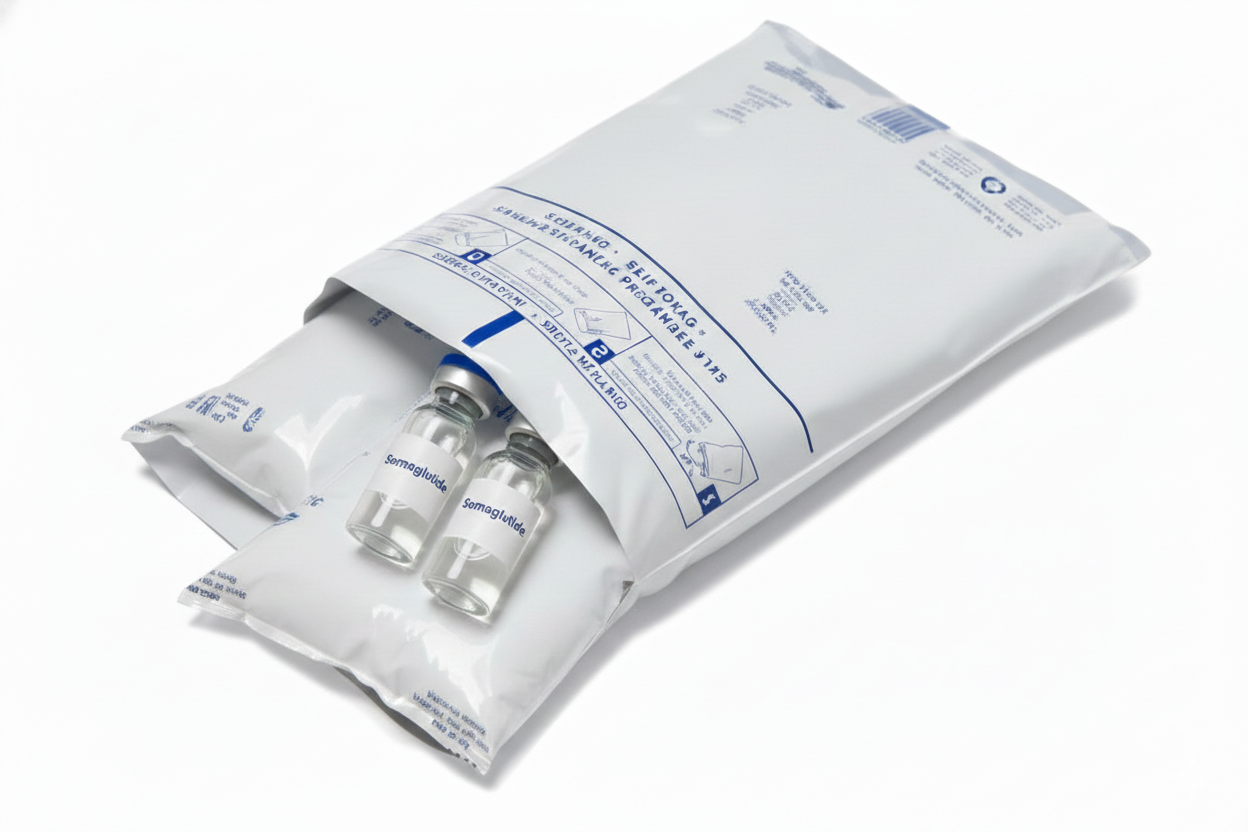
FROSTEXPAND
Self-expanding foam mailer that replaces the EPS cooler. Ships and stores flat, then expands at pack-out to cocoon vials in a form-fitting insulated cushion. No outer box, no void fill, no kitting. UN3373 compliant. The best fit when storage space is the binding constraint.
VIEW DETAILS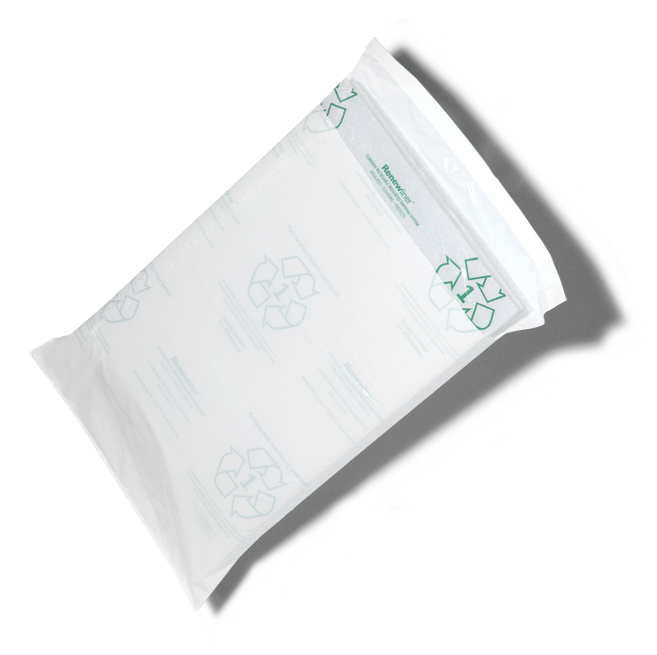
FROSTMAILER
Curbside-recyclable rPET thermal mailer, ISTA 7E validated up to 39 hours. Small-format and ultralight, which matters when you are paying dimensional weight on every patient-direct parcel. Ideal for single-patient peptide shipments.
VIEW DETAILS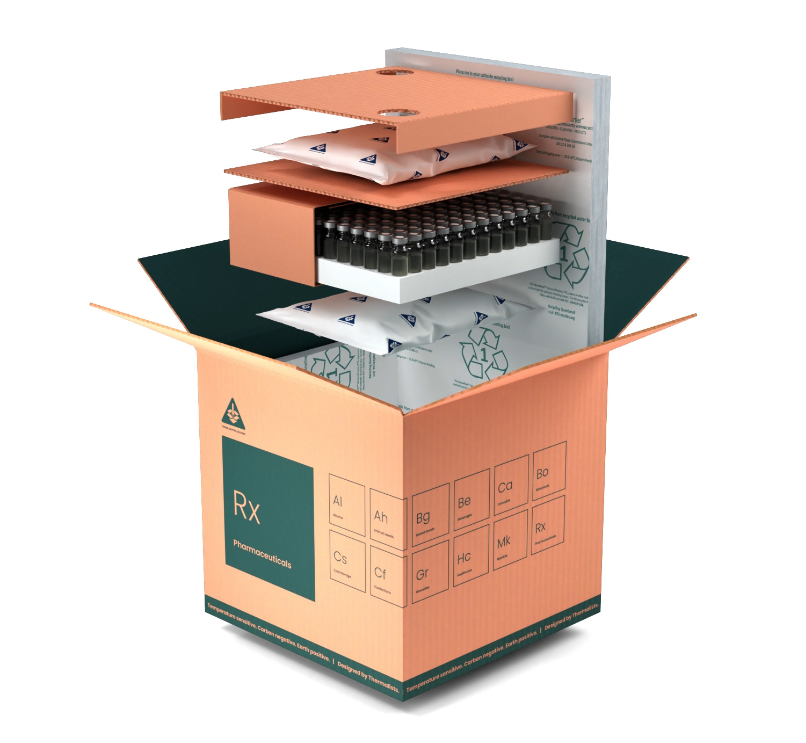
FROSTLINER
Curbside-recyclable insulated liner for a box-and-liner pack-out. 100% rPET, 40% lighter than EPS foam, FDA certified and ISTA 7E validated. Pairs with integrated cooling packs for 24 to 72-hour 2–8°C lanes.
VIEW DETAILS
REFRIGERANTS
FrostGel packs and FrostSheet phase-change materials matched to payload and lane. PCM holds a tighter band than water-based gel for 2–8°C work, which is why it shows up in longer and hotter lanes. We spec it with you.
VIEW DETAILSPEPTIDE PACK-OUT STARTING POINTS
A first-pass matrix by shipment profile and transit lane. Final configuration depends on payload volume, formulation, and worst-case seasonal ambient on your specific lanes — which is what a pack-out consultation resolves.
| SHIPMENT PROFILE | TRANSIT LANE | RECOMMENDED SHIPPER | REFRIGERANT |
|---|---|---|---|
| Single vial, single patient | Regional, ≤24 hrs | FrostExpand 9×11" or FrostMailer 9×11" | 1 gel pack |
| Multi-vial, month supply | Cross-country, 24–48 hrs | FrostExpand 12×14" or FrostMailer 12×14" HD | 2 gel packs / PCM |
| Multi-patient batch | Cross-country, 48–72 hrs | FrostBox 8×8×8" or FrostLiner 10×10×10" | PCM, sized to payload |
| Summer lane, any profile | Peak ambient | Step up shipper or add insulation | Re-sized to worst-case ambient |
Hold times vary with ambient temperature, payload mass, and pre-conditioning. Treat this table as a conversation starter, not a validated pack-out for your product.
GO DEEPER
How to Ship Peptides & GLP-1 Medications
The full pack-out walkthrough: temperature band, refrigerant selection, transit planning, and handoff discipline.
Semaglutide & Tirzepatide Refrigeration
Storage and transit requirements for the two most-shipped GLP-1 molecules, and what happens when they drift out of band.
Gel Packs vs PCM for 2–8°C
Why phase-change material holds a tighter band than water gel, and when the cost difference is justified.
Insulated Mailer Hold Time at 2–8°C
Real hold-time expectations by mailer format, and why a "24-hour" mailer is not a 24-hour mailer in August.
Cold Chain Compliance for Compounding Pharmacies
Documentation, USP considerations, and what a board of pharmacy expects to see.
Summer Shipping for Telehealth Pharmacies
Hot-weather playbook: cutoffs, ambient planning, and the patient excursion conversation.
FREQUENTLY ASKED QUESTIONS
What temperature do peptides and GLP-1 medications ship at?
Refrigerated 2–8°C for reconstituted and compounded peptides, and for GLP-1 pens and vials in transit. Exposure above 8°C risks degradation and potency loss. Freezing is also a failure — the requirement is a band, not a floor.
How long can an insulated mailer hold 2–8°C?
It depends on ambient temperature, payload mass, refrigerant load, and pre-conditioning. FrostMailer is ISTA 7E validated up to 39 hours under its test profile. The honest answer for your lane comes from a pack-out consultation, not a spec sheet number.
Do I need PCM or are gel packs enough?
Gel packs are sufficient for many short refrigerated lanes. Phase-change material holds a tighter band and is worth the cost on longer transits, hot-season lanes, and any shipment where an excursion means a destroyed prescription rather than an inconvenience.
Is the packaging validated and compliant?
Configurations are 2–8°C validated and ISTA 7E tested, built from FDA CFR 21 food-contact-safe materials. FrostExpand is UN3373 compliant for biological substances.
Can I get samples before committing?
Yes. There are no minimum order quantities on standard products. We match samples to your shipment profile so you are testing the configuration you would actually run.
GET YOUR PACK-OUT SPEC'D
Send us the product, the lanes, and the season you are worried about. We will spec the shipper and refrigerant, confirm the lead time in writing, and get you samples.